Curtain Wall Spraying for Commercial Buildings: When Refurbishment Makes More Sense Than Replacement
If the aluminium frames and panels on your building look faded, dated or uneven, curtain wall spraying may offer a smarter route than tearing the whole façade out. For facilities managers, landlords, asset managers and contractors, the real question is usually not whether the frontage could look better. It is whether the existing curtain walling is still fundamentally sound enough to refurbish.
On many commercial buildings, a professional spray-applied finish can improve appearance, support planned maintenance and avoid the disruption that often comes with full replacement. That does not mean spraying is right for every project. The condition of the substrate, access, preparation requirements and wider building issues all need proper assessment first.
At Spraytastic, we provide curtain wall spraying and commercial spray painting services from our base in Broxbourne, working across London, the Home Counties and the wider South, with larger industrial contracts taken on nationwide. In this guide, we explain when refurbishment often makes more sense than replacement, and when replacement may still be the better decision.
What curtain wall spraying actually involves
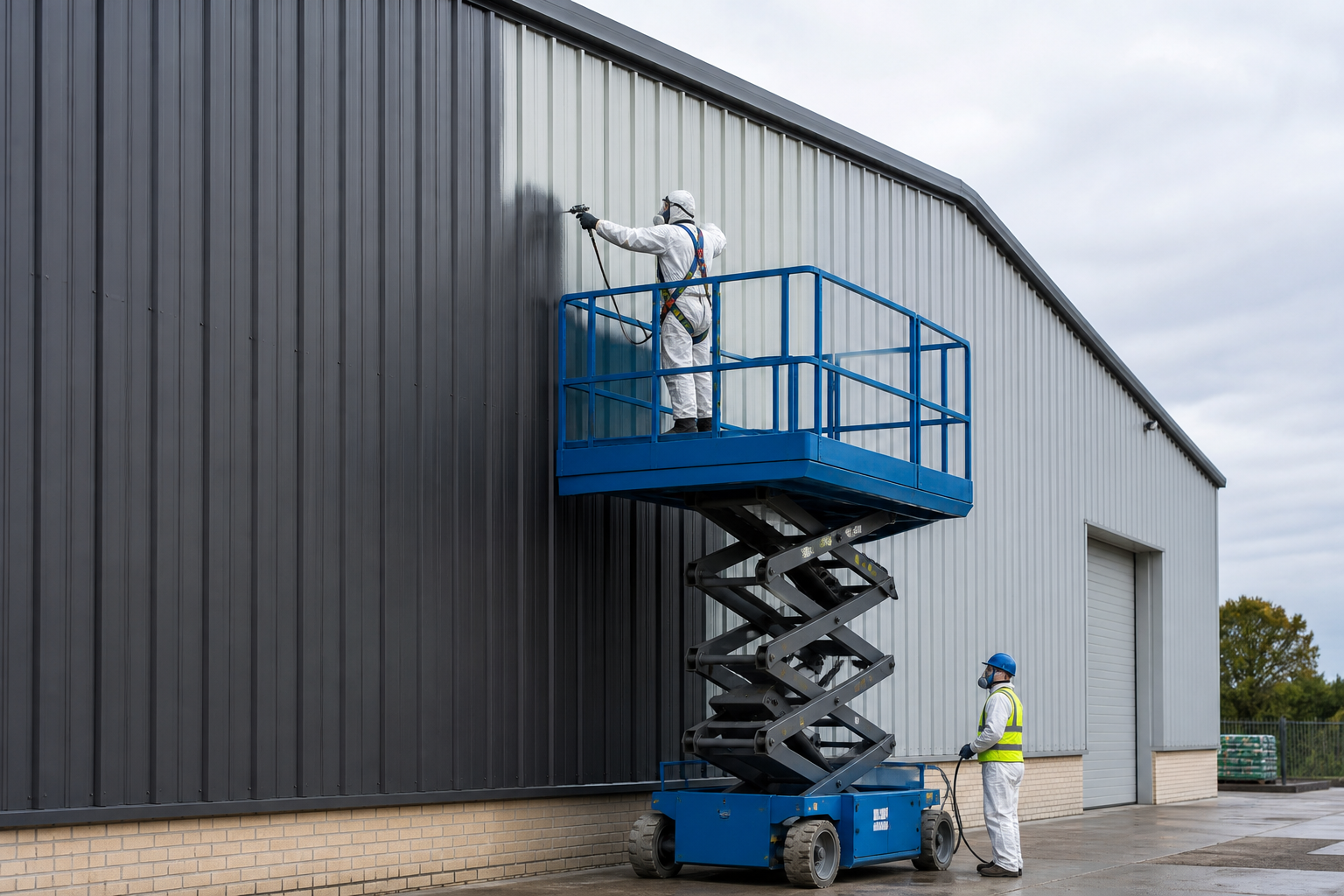
Curtain wall spraying is a refurbishment process for suitable commercial façades, typically involving the aluminium framing and solid panel elements of an existing curtain wall system. It is aimed at refreshing the finish where the underlying system remains serviceable.
It is also important to be clear about scope. Spraying can restore the visual finish of approved surfaces, but it is not a substitute for replacing failed glazing units, correcting structural movement or solving major system failure.
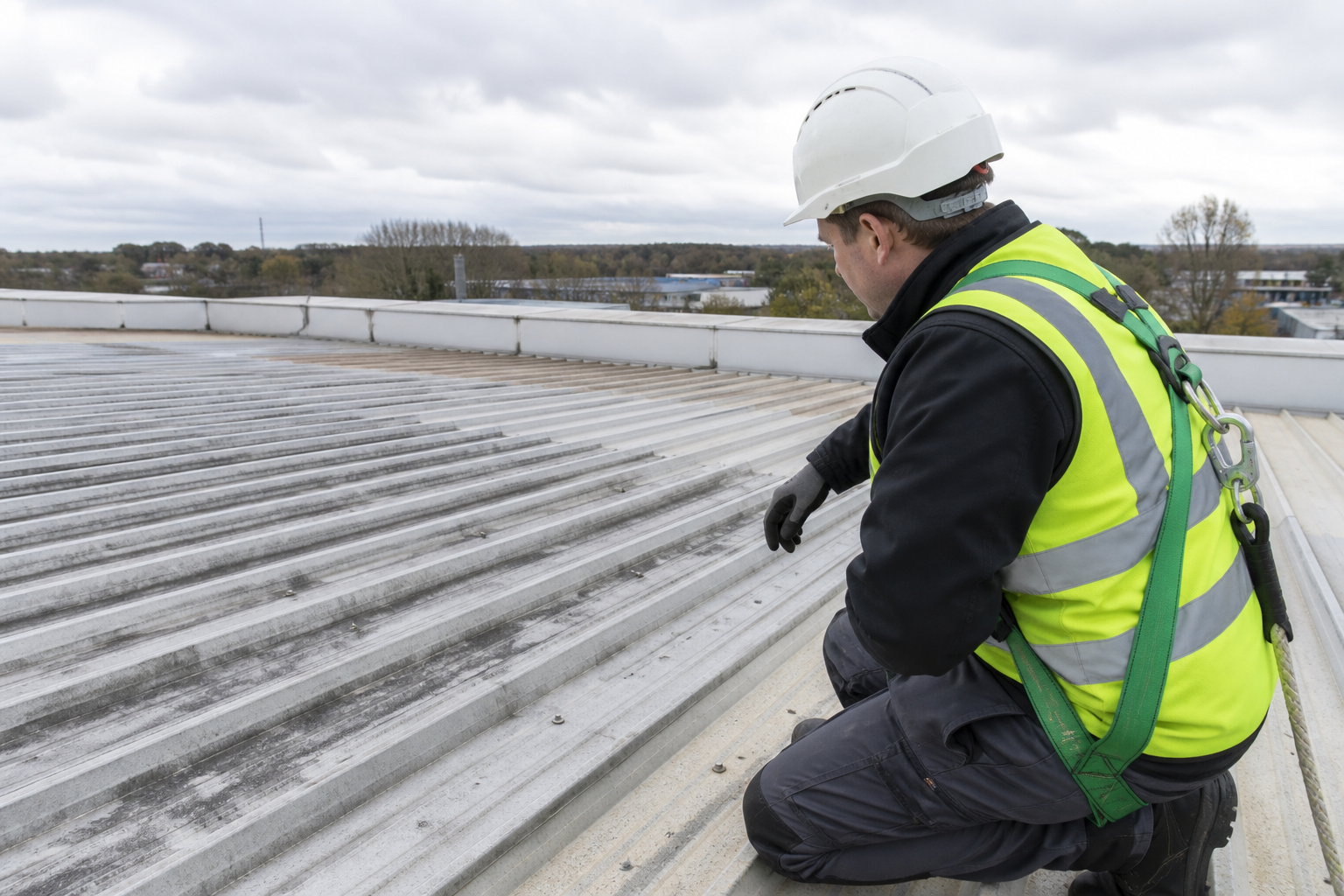
Initial assessment to check suitability, condition and access requirements
Cleaning and preparation so the coating can bond correctly
Masking and protection of glazing and adjacent areas
Application of specialist coatings to suitable non-glazed elements
Quality checks to review finish consistency and presentation
When specified correctly, curtain wall refurbishment can give a tired building a cleaner, more modern appearance without defaulting to wholesale removal and replacement.
When Curtain Wall Spraying Makes More Sense Than Replacement
The curtain walling is visually tired, but still serviceable
Many commercial façades do not fail all at once. More often, the first issue is visual decline. Frames may look chalky, faded, weathered or simply out of step with the standard expected by tenants, visitors or customers.
If the system is still broadly sound, spraying may be the practical middle ground. You retain the existing framework while upgrading how the building presents from the outside.
You need to minimise disruption on an occupied site
Full replacement can involve substantial strip-out, site logistics and programme pressure. On occupied offices, mixed-use schemes, healthcare settings, education buildings or customer-facing premises, that level of intervention may be difficult to manage.
Refurbishment can often be phased more efficiently around building use. While any external works still require planning, spraying may be a more manageable option where access, entrances and day-to-day operations need careful coordination.
You want a colour change or visual refresh
Sometimes the driver is not failure at all. The building may simply look dated, inconsistent or poorly aligned with a wider refurbishment programme. Curtain wall spraying can be a strong option where you want to modernise the appearance, create a more uniform finish or support a rebrand without replacing otherwise usable components.
This is particularly relevant when curtain walling sits alongside other façade elements that are also being upgraded through external spray painting or wider external refurbishment works.
You want to avoid unnecessary strip-out
If the existing curtain walling can still do its job, removing it purely for cosmetic reasons may not be the most sensible use of budget. Refurbishment allows decision-makers to focus capital spend where it is genuinely needed, rather than replacing systems simply because they no longer look their best.
Retaining suitable elements may also help reduce the waste and disruption associated with full façade replacement.
You are planning maintenance rather than reacting to failure
The best refurbishment decisions are often made before the building reaches a crisis point. If the finish is deteriorating but the curtain wall system is still suitable for coating, spraying can form part of a more proactive maintenance strategy rather than an urgent response to more advanced problems.
When replacement may be the better decision
Not every curtain wall system is a good candidate for spraying. A site survey should be honest about that. Replacement is more likely to be the correct route when the issue goes beyond surface appearance and into broader system failure.
There is widespread structural damage or distortion affecting the integrity of the system.
Corrosion is advanced and not limited to the existing finish.
Glazing units, seals or gaskets have failed and the façade has wider performance problems.
There is persistent water ingress linked to curtain wall failure rather than isolated maintenance items.
The project requires a full specification change rather than a finish upgrade.
The substrate is unsuitable for coating or cannot be prepared to the standard needed for a reliable result.
In short, spraying works best where the curtain walling is still fundamentally serviceable and the main issue is the condition or appearance of the external finish. Where the system itself is failing, replacement may be unavoidable.
What to assess before choosing curtain wall spraying
1. The condition of the substrate
The starting point is always the existing surface. A good-quality finish depends on the condition of the aluminium frames, panels and any existing coating layers. Local wear can often be addressed through preparation, but more serious defects can change the viability of refurbishment.
2. Access and building logistics
Height, site access, pedestrian routes, parking, loading areas and neighbouring properties all affect how the project should be planned. On live commercial sites, it is also important to think about working hours, tenant access and how the works will interface with daily operations.
3. Preparation requirements
Preparation is one of the biggest factors in the success of any commercial spraying project. Depending on the building, that may include cleaning, degreasing and pressure washing and surface preparation before masking and application begin.
Skipping or underestimating preparation is one of the quickest ways to compromise the finish, so this stage should never be treated as an afterthought.
4. The finish you want to achieve
Some projects call for a like-for-like refresh. Others involve a full colour change to update the building visually. The required finish, sheen level and colour consistency should be discussed early, especially on high-visibility elevations and entrance areas.
5. Coordination with other external works
Curtain wall spraying often sits alongside roofing, cladding, signage or other improvement works. Sequencing matters. Planning the façade refurbishment within the wider project helps avoid access clashes, unnecessary remobilisation and programme delays.
6. Warranty expectations
If warranty support matters to your project team or end client, raise that at survey stage. At Spraytastic, we provide warranties and can discuss manufacturer-backed guarantees on appropriate projects.
Why commercial clients choose Spraytastic
We are a specialist commercial and industrial spray painting and roof coatings company. That means our approach to curtain wall refurbishment is shaped by practical site delivery, not just appearance alone.
Commercial and industrial focus: We work on contract-led projects where planning, communication and consistency matter.
Relevant supporting services: Our offering includes curtain wall spraying, roof coatings, roof spraying, metal cladding spraying, internal spray coatings, pressure washing and jet washing.
Clear communication: We keep clients informed throughout the job so expectations, access arrangements and progress remain clear.
Before-and-after project photography: Useful for records, reporting and sign-off.
Warranties on appropriate work: We can advise on suitable options during the survey process.
For clients reviewing building exteriors, that joined-up approach matters. Refurbishment decisions are rarely made in isolation. They sit within budgets, tenant expectations, maintenance plans and programme constraints.
If you are comparing options, our role is to assess the façade honestly, explain whether spraying is suitable and help you make a decision based on condition rather than assumption.
What a site survey should tell you
A proper curtain wall assessment should give you clear answers, not vague assumptions. Before any works are planned, you should know:
Whether the existing curtain walling is suitable for spraying refurbishment
Which elements can be coated and which cannot
What preparation and protection measures will be needed
How access and phasing can be managed around the building’s use
What finish expectations, timescales and warranty options are realistic
That level of clarity is especially important when you are reporting to stakeholders, managing a live site or balancing refurbishment against a more expensive replacement proposal.
Frequently asked questions about curtain wall spraying
Can aluminium curtain wall frames be spray painted?
In many cases, yes. Aluminium curtain wall frames can often be coated as part of a refurbishment project, provided the surface condition, existing finish and preparation requirements are all suitable. The exact specification should always be based on a professional survey.
Is curtain wall spraying cheaper than replacement?
It can be a more cost-effective option where the existing system is still sound, because it avoids full strip-out and replacement. However, cost depends on access, preparation, building condition and project scope. A survey is the right way to compare options properly.
Does curtain wall spraying fix leaks or failed glazing?
No. Spraying is a finish refurbishment solution, not a cure for broader curtain wall failure. If leaks, failed seals, glazing issues or structural defects are present, those problems need to be assessed and addressed on their own merits.
Is curtain wall spraying suitable for occupied commercial buildings?
It often can be, particularly where phasing, access planning and protection are handled properly. Every occupied site is different, so the working method should be built around entrances, pedestrian routes, tenant needs and operational constraints.
How long does a curtain wall sprayed finish last?
That depends on the condition of the existing substrate, the preparation carried out, the coating system used and the environment the building is exposed to. On appropriate projects, we can discuss warranties and manufacturer-backed guarantees as part of the specification process.
Conclusion
If your curtain walling looks tired but the system is still fundamentally serviceable, refurbishment may be the sensible middle ground between doing nothing and committing to full replacement. The key is knowing whether the issue is mainly cosmetic, or whether deeper system problems are involved.
At Spraytastic, we provide honest site assessments, reliable project communication and contract-led delivery for commercial and industrial clients. If you are weighing up refurbishment against replacement, request a site survey to find out whether your curtain walling is suitable for spraying, what preparation will be needed and how the work can be planned with confidence.