Metal Cladding Spraying vs Replacement: What’s Best for Warehouses and Industrial Units?
If your warehouse or industrial unit is starting to look faded, weathered or uneven, metal cladding spraying may be a far more practical option than full replacement. The right choice depends on the condition of the existing panels, the level of disruption your site can tolerate, and what you need the building to achieve over the coming years.
For many commercial owners, facilities managers and contractors, the real question is not simply which route feels easiest in the short term. It is which option delivers the right balance of appearance, protection, programme control and long-term value. In this guide, we explain when spraying can make sense, when replacement may be the better decision, and why a proper site assessment matters before work begins.
Why this decision matters on warehouses and industrial units
Cladding is one of the first things people notice on a commercial building. When it looks tired, patchy or heavily weathered, it can affect how the site is perceived by clients, staff, visitors and tenants.
On industrial buildings, the scale of the elevations also makes defects more visible. A relatively modest issue on a small property can become a major visual problem on a warehouse, factory or distribution unit.
Large wall areas can make fading and surface wear stand out quickly
Busy sites often need a solution that can be planned around operations
Owners and managers usually want to avoid unnecessary strip-out if the cladding is still sound
Maintenance decisions need to support both appearance and practical building management
That is why the choice between refurbishment and replacement should be based on condition and suitability, not assumption.
What metal cladding spraying actually involves
It is a refurbishment process, not a shortcut
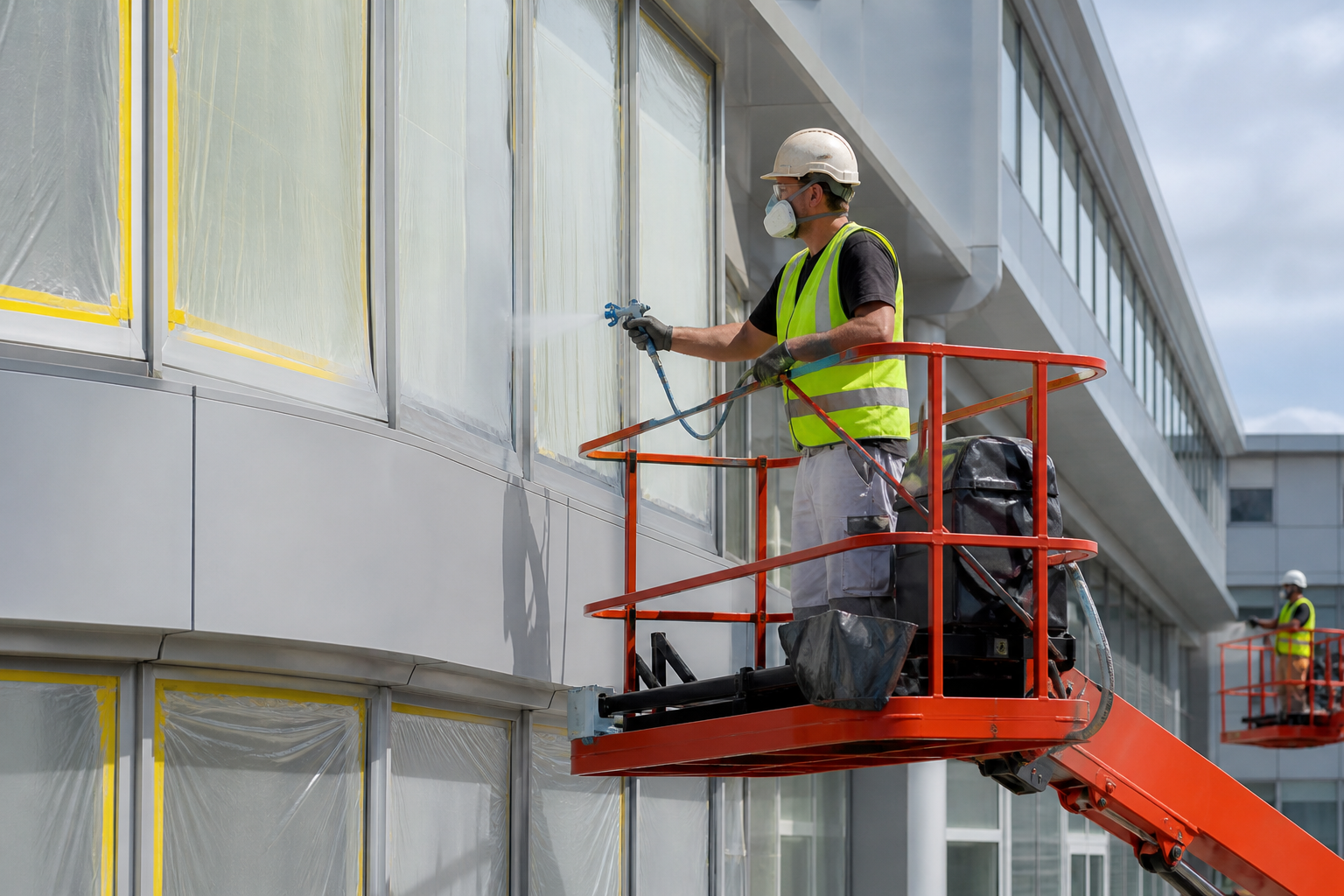
Metal cladding spraying is used to restore the finish of suitable existing metal cladding. Where the substrate remains in appropriate condition, a professional sprayed coating system can refresh the appearance of the building and help extend the life of the existing finish.
It is important to be clear about what spraying can and cannot do. It can transform tired-looking surfaces when the panels are still serviceable. It is not a way to disguise failed cladding or avoid necessary repair work.
Preparation is critical to the result
The success of any cladding spraying project depends heavily on preparation. That includes understanding the existing surface, identifying any localised issues and making sure the cladding is suitable for coating.
Preparation may involve cleaning, degreasing, localised remedial work and, where required, pressure or jet washing before the coating system is applied. On commercial buildings, the quality of this stage often has as much influence on the final result as the spraying itself.
When metal cladding spraying is often the better option
The panels are weathered but fundamentally sound
If the main problem is colour fade, a tired finish or general visual ageing, spraying is often worth considering. In many cases, the cladding itself is still performing, but the outer appearance no longer reflects the standard of the site.
You want to avoid the disruption of full replacement
Replacing cladding can involve extensive removal, disposal, deliveries, sequencing and wider coordination on site. For operational warehouses and industrial units, that can create significant logistical pressure.
Where refurbishment is suitable, spraying is often considered because it can deliver a major visual improvement without the same level of strip-out associated with replacement.
You need a consistent finish across large elevations
Industrial buildings often have broad, uninterrupted wall areas. When these surfaces become patchy, faded or mismatched, the whole unit can look older than it is. A professionally applied sprayed finish can create a cleaner, more uniform appearance across the building envelope.
Faded or sun-worn colour
Patchy, tired or uneven-looking finishes
Surface wear that affects kerb appeal but not the basic integrity of the cladding
A need to refurbish an occupied site with less disruption
A desire to improve the appearance of a commercial asset as part of planned maintenance
When replacement may be the better route
The cladding is no longer structurally sound
If panels are badly damaged, unstable or beyond practical repair, replacement is usually the more appropriate route. A coating can restore the finish of suitable metal cladding, but it cannot resolve genuine panel failure.
There are deeper building envelope problems
Visible deterioration is not always just a surface issue. If the building has wider defects linked to joints, flashings, fixings or water ingress, those problems need to be understood before a coating system is considered.
Sometimes targeted repairs may be enough. In other cases, more substantial replacement work may be required first. The key point is that the condition of the cladding system has to be assessed properly.
The existing substrate is not suitable for coating
Heavy corrosion, unstable previous coatings, contamination or inconsistent historic repairs can all affect whether a sprayed refurbishment system is suitable. This is one of the main reasons site-specific assessment is so important.
In simple terms, spraying is most effective when the issue is mainly at finish level rather than failure level.
Metal cladding spraying vs replacement: what should you compare?
If you are deciding between refurbishment and replacement, focus on the practical issues that affect the building and the project as a whole.
Condition of the existing cladding. Sound panels with cosmetic deterioration are very different from panels with serious damage or failure.
Operational disruption. Consider how much access, removal work and site interference your business can realistically accommodate.
Appearance goals. If the main aim is to restore a clean, professional finish, spraying may be appropriate where the substrate allows.
Programme and access requirements. Warehouses and industrial units often have live operations, vehicle movement and working-area restrictions that influence the right approach.
Budget planning. A sensible decision should look beyond headline cost and consider suitability, downtime and long-term maintenance strategy.
Future asset plans. If the building remains part of your portfolio for the long term, planned refurbishment may fit better than waiting for visible deterioration to become more serious.
Why a site assessment should come before any final decision
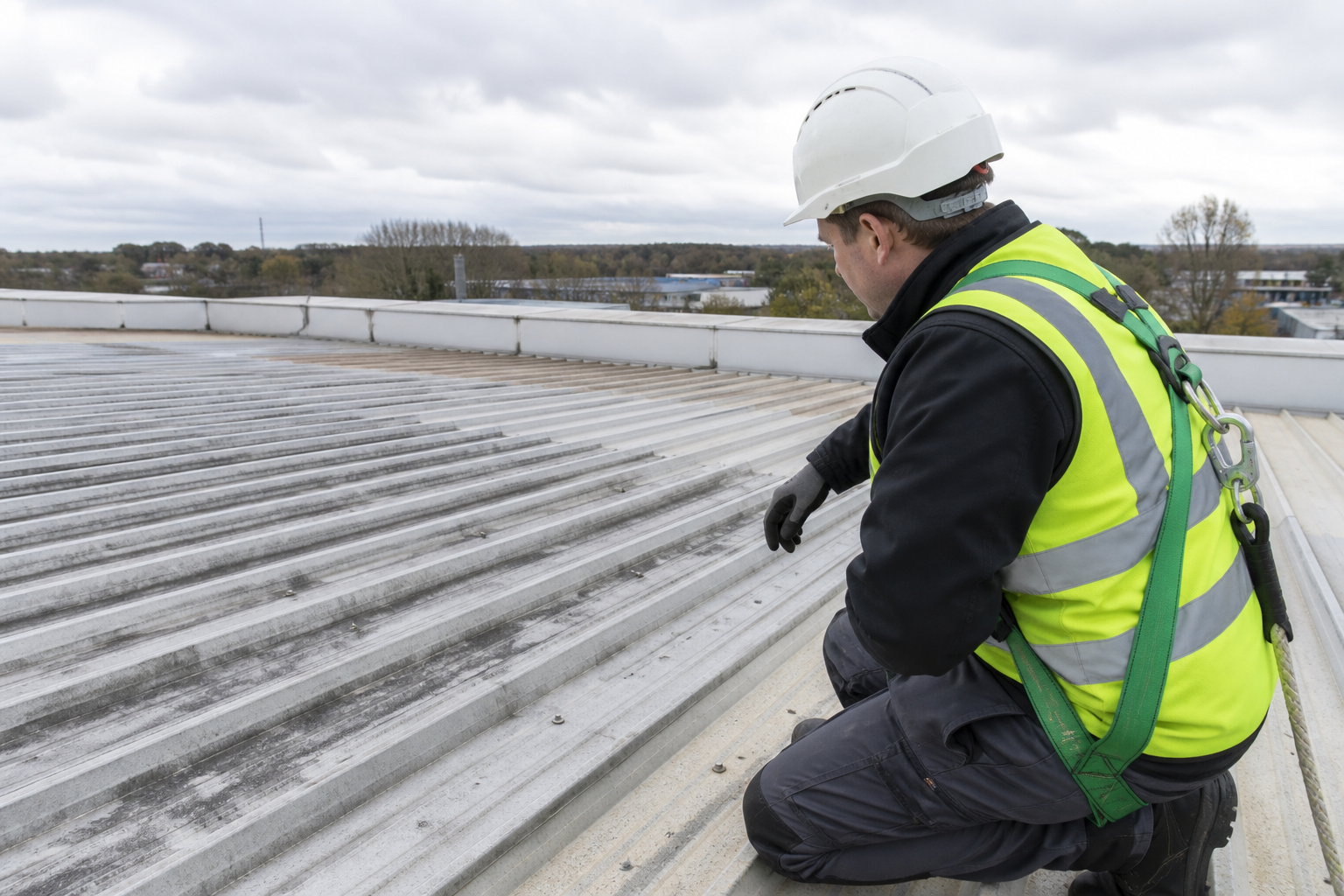
Two buildings can look similar from ground level and still need completely different solutions. One may be a good candidate for cladding spraying. Another may need repairs or replacement in specific areas before coating is even an option.
A proper assessment should consider:
The type and overall condition of the metal cladding
Signs of corrosion, damage or failing sections
The condition of the existing finish
Preparation requirements
Access needs and site constraints
How the work can be delivered safely on a commercial site
This stage helps avoid two expensive mistakes: replacing cladding that could have been successfully refurbished, or trying to coat surfaces that are not suitable for a long-lasting result.
How we approach commercial cladding refurbishment at Spraytastic
At Spraytastic, we are a specialist commercial and industrial spray painting and roof coatings company based in Broxbourne, Hertfordshire. We work across London, the Home Counties and the wider South, and we also take on larger industrial contracts nationwide.
Our work includes metal cladding spraying for commercial and industrial buildings alongside external spray painting and roof coating services. We also provide pressure and jet washing as part of surface preparation where required.
We focus on high-quality workmanship and reliable, contract-led delivery. Clients also value clear project communication, before-and-after project photography and warranties that help give confidence in the finished work. On appropriate projects, manufacturer-backed guarantees may also be available.
Most importantly, commercial spraying should always start with suitability. The right recommendation depends on the condition of the building, not on a one-size-fits-all approach.
Common concerns about metal cladding spraying
Will the finish look professional?
When the cladding is suitable and the preparation is done properly, a sprayed finish can create a clean, consistent upgrade across large elevations. The standard of preparation and application is what drives the quality of the result.
Is spraying only a cosmetic fix?
No professional refurbishment should be treated as a shortcut. On the right substrate, spraying is part of planned maintenance and asset improvement. The important point is making sure the cladding is a suitable candidate before work starts.
What if our site needs to stay operational?
That is common on warehouse and industrial projects. Access planning, communication and practical sequencing all matter, especially where the building remains in active use during the works.
Frequently asked questions about metal cladding spraying
Is metal cladding spraying cheaper than replacement?
It can be a more cost-effective option where the existing cladding is still sound and the main issue is the condition of the finish. The right comparison depends on the substrate, access, preparation and whether any repairs are needed before coating.
Can badly faded warehouse cladding be sprayed?
Yes, faded or tired-looking cladding may be suitable for spraying if the underlying panels remain in appropriate condition. A professional site assessment is the best way to confirm whether refurbishment is a realistic option.
How long does a metal cladding spraying project take?
Timescales vary according to the size of the building, preparation needs, access requirements, weather exposure and any operational constraints on site. Commercial buildings should be assessed individually rather than judged by a generic estimate.
Do you prepare surfaces before spraying?
Yes. Surface preparation is a key part of the process, and we provide pressure and jet washing where required as part of preparing suitable surfaces for coating.
Where do you carry out commercial spraying projects?
We work from Broxbourne, Hertfordshire, across London, the Home Counties and the wider South, and we also take on larger industrial contracts nationwide.
Conclusion
For many warehouses and industrial units, full replacement is not automatically the first answer. When the existing metal cladding is still sound and the main problem is a tired or weathered finish, spraying can be a practical refurbishment route that improves appearance and supports a more planned approach to maintenance.
The key is knowing where refurbishment ends and genuine replacement needs begin. If you are weighing up the options for your building, request a free consultation and site assessment from Spraytastic to discuss whether metal cladding spraying is the right fit for your site.